Hōcąk Text — Mr. Woodpecker
(Holy One and His Brother, Version 2b)
by Stella (Blowsnake) Stacey, a.k.a. Mountain Wolf Woman
transcribed and translated by Sheila Shigley
|
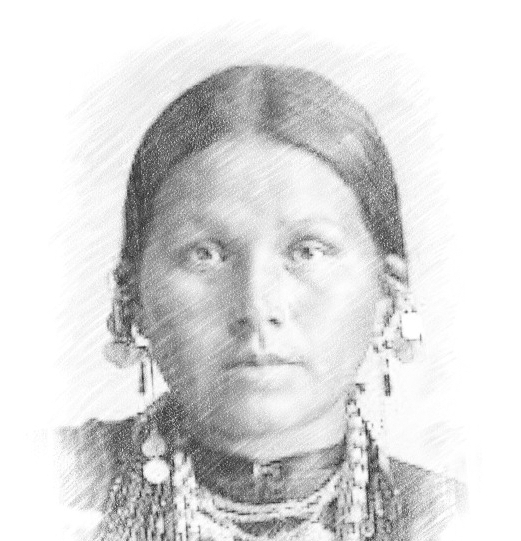
| Stella Stacy (Mountain Wolf Woman) |
Stylistic Features
| hapaxlegomena: ą, an exclamation translated as "ah" as in English, expressing pleasant surprise; gų́s, in the sense of "to be against";
wḗa, an exclamation expressing indignation; |
|
| rare words: gwakjįr̨a, probably meaning something like, "O great woe!" Gwa is probably a variant of gwo; o, an exclamation found elsewhere only once;
|
| 00:04 | ||
| Cósgéga, | Hąhą, | Cósgéga |
| Mr. Woodpecker, | Yes, | Mr. Woodpecker |
| 00:7.2 | 00:19.6 | |||||||
| Žé, | wą́gížą, | žé, | Waxopı̨́nį | warájirera | haną́c | gų́zireže. | Haną́c | gų́zire |
| This one, | a man, | this one, | Spirits | as they are named, | all | they were against him. | Everyone | they were against him |
| 00:26.1 | 00:35.5 | ||||||||||||
| giži, | že’e, | žé | wa’ų́že, | Hų́k | nı̨́kją́k, | éja, | nı̨́ | pų́záke | eja | šgácᵉną̄́k, | hocı̨́cı̨́ | že’e, | wagúcšé, |
| because, | that one, | this | [they did it.] | Leader | child, | there | water | beach | there | they were playing, | boys | those, | he shot them, |
| 00:43.7 | 00:50.58 | ||||||||
| giži | wa’óre | hakaráireže. | Giži, | že’e | ḗsge | wa’ų́įneže, | haną́c | gų́zireže. | Gų́ziregíži, |
| thus | [wounded ?]* | they went home. | So, | that way | that’s why | they were being, | everyone | they were against him. | So they were against him, |
* cf. (h)óre-hi, "to wound, to hit the mark"; ’ō, "to hit a target with an arrow or bullet, to hit the mark" (Helmbrecht-Lehmann); ’ō, "to hit target with arrow or bullet, or in the Moccasin Game (Kingswan), ’o, "to shoot" (Marino).
| 00:59.7 | ||||||||
| ųsge, | wažą́r̨aną̄́cixjį, | égų, | hanągísairekje | žéesgéže. | Hahí, | warúc | rucgús | giži, |
| and, | absolutely everything, | then, | [he would have to be cut off from] | [just like that]. | Eventually, | [food] | he had stored away | -, |
| 01:07 | ||||||||||
| haną́c, | cíšúhùc* | "wópı̨́kere,"† | áiren', | cı̨́ja | wánįna, | wanı̨́na | hokšúires’agi, | ḗsge | wagáireną, | "wópı̨́kere," |
| all of it, | the base of the poles (?) | "cache," | they call it, | where | his, | meat | they always store, | that’s what | they’re describing, | the "cache" |
* cīšuhuc, "the base of the poles"? There is cīhuic, foundation of the house, to consider. húic (Aooitt), "base, as a base of a tree or mouth of a river" (Kingswan), huic, "source" (Hōcąk Language Teachers, Blue Zepsicon), huį́cecá, "at the short end" (Sam Blowsnake).
† or storage rack, drying stand.
| 01:12.4 | 01:16.4 | |||||||||
| áiren'. | Žéesgáiregišga | e | haną́c | céb | wakaragíže, | wánı̨́ną́. | Gają, | žéją́ga | hahí | wažą́naną́c, |
| it is called. | So it even came to be that | he | all | to have finished it | he did for himself, | the meat. | Then, | finally | it came to be | everything, |
| 01:21.6 | 01:30.9 | ||||||
| žéją́že. | Gają, | wáhúhìžēge | hawahúhi | híreánąga, | hawuhı̨́c–wáwuhı̨́c | híreže. | Círáhèįgrašąną |
| it was depleted.* | Then, | it actually snowed, | (everything) to be snowed on | it was, and | to be snowed over | it was. | Only in the little smoke hole |
* literally, "ended".
| 01:35.2 | 01:39.2 | |||||||||
| cówéxjį | póx | gója | péjokit’ų́nąki.* | Giži, | gwa-a-akjįr̨a! | žé | wa’ų́že, | wažą́naną́c | cépkaragíži, | gają |
| barely | hole | there | that fire he had made for himself.† | Then, | O great woe!‡ | that | he did, | everything | he had used up, | so at that time, |
* < péja-hokit’ų́nąk-gi.
† in other words, everything was covered except for that little smoke hole?
‡ speculative, but see gwo.
| 01:42.1 | 01:47.2 | ||||||||||
| ųsge, | mą́cgúskąr̨a, | áireną, | žé, | táǧwíckaragiánąga, | že’e | kúrucže. | Égi, | égi, | nįgé, | wárá | gisápgé |
| well, | the bowstring, | they call it, | there | he roasted for himself, | that | eating for himself. | Then, | then, | somewhere, | snow | to be pinned under |
| 01:59.2 | |||||||||
| ų́šgų́nįže, | wažą́ | honįhiánąga, | karahá’ųn'. | Karahá’ų, | ke | ruš’ákže. | Ką́nįyą | t’éhí | jagu |
| it did, | something | he went to hunt, and | he was going along. | Going along, | not | he didn’t succeed. | Nothing | he killed | since |
| 02:04.2 | ||||||||
| gų́zire | wa’ųą́kge. | Gają́, | wanı̨́giyą́ | žegų | cíšára | hoitú | éja | hogiyéže. |
| they had cut everything off to him | since they had done it. | Then, | a bird | that way | coming around | he brushed* | that† | he came around. |
* literally, "fanning".
† house part? face part?
| 02:10.7 | - | |||||||||||
| Nų́bąhą̀isge | gigíži, | gają, | "Wḗa, | jágú | té | jágú [žęregana] | té," | hegų | áną̀ka, | wógítekše, | wánįgiyą́ąk | hegų |
| Like two times | when it did it, | then, | "[Exclamation] | what | [this] | what [kind of thing] | here!" | [thus] | he said, | angrily, | that bird | [thus] |
| 02:21:7 | |||||||||
| cówé | gisákᵉną́. | Gaja,̨ | wéže, | "Į-į-į, | Hicų́šge, | nı̨́gíjitekjege, | wá’ųr̨ą! | Hą́, | wónı̨́gitek," |
| almost | he could have killed it. | Then, | he said, | "[Exclamation] | Grandson, | in order to help you, | I am doing this! | [Exclamation] | you’re angry," |
| 02:30.1 | 02:34:8 | ||||||||||
| éže, | wanįgı̨́g[šjek]. | "Hą̨̄́, | egi | wóigiràgire | ké | yápéresnį | wá’ųną," | éže. | Gają́, | "Hą̨̄́, | Hicų́šgé, |
| it said, | the little bird [__]. | "[Exclamation] | so | what's being told, | not | I do not know | to do it," | he said. | Then, | "[Exclamation] | Grandson, |
| 02:37.8 | 02: 42.9 | |||||||
| haną́c | nįgų́ziréną," | éže. | "Haną́c | nįgų́ziréną. | Gają, | néšąną | hąké | hų́gírakireánąga |
| everything | they’ve cut off to you," | it said. | "Everything | it has been cut off. | So, | I alone | not | I haven’t been [officially] informed about anything, and |
| 02:52.8 | |||||||||||
| ésge | honįgítak, | wahá–wa-honįgítaikjege, | wá’ųną," | éže. | Giži | éja | žéhésge | hogʷís–hogʷírákže. | "Giži | ų́sgé, | wa’ų́įnekjanéną, |
| therefore | I'm telling this to you, | I can be helping you | to do it," | it said. | Thus | there | like that | it told. | "So, | well, | they’re going to do it, |
| 03:9.8 | ||||||||||||
| ų́sgé, | hą́biyą́ | horákną̀ka, | žé | éja, | Wakjéxínı̨̀gra, | Mą́ Nų́p | warage[-gi?], | žé, | žé, | Hégéga | hikišére | wagigírekjenéra. |
| so, | one day | telling, | that | there, | the little Water Spirits, | Second Earth* | you mean, | there, | there, | Mr. Buzzard† | to mess with | he is going to do to them. |
* the underworld where the Waterspirits (Wakjexira) live.
† the meaning of Hégéga is unclear. See the Commentary.
| 03:16.2 | 03:25.6 | ||||||||||||||
| Xeópase | žé | éja | hoiyušánąga, | égi, | égi | Wakjéxí | hocíra | hokéwekjen'.* | Žé, | ųą, | hų́grá | nı̨́kją́k | wanįna | rušją́, | wékjége, |
| Hilltop | that | at | he's going to stop, | and, | and | Waterspirit | house | he is going to go into. | There, | well, | the chief | children | his | to stop, | because he's going to say, |
* for hokéwekjenén'.
| 03:33.1 | 03:37.1 | ||||||||||||
| 'Ésge | ha'ų́kjenén'," | ēže. | "Hą́, | Kųnįka, | hųr̨ágišaraxᵉra | (h)aipı̨́ną," | éže. | Gają, | žésgže,* | hą́p | hagájege† | éja, | éja, |
| 'That is why | I'm going to stay there awhile'," | it said. | "Yes, | Grandma, | that you've told me | I am pleased," | it said. | Then, | like that, | day | one | there, | there, |
* or žésgeži.
† or hagájega.
| 03:45.8 | 03:50 | |||||||||||||
| xḗ–hopásé[wagega] | éja, | híže. | Éja | hí | gają, | Hitókeįka | té | éja | ną́téjé’éže, | hegų, | cáš,* | cáš, | cáš, | égi,† |
| to the hilltop | there | he went. | There | he arrived | when, | Little Grandma | [this one] | there | she was chopping wood, | so, | caš, | caš, | caš, | as she was saying,‡ |
* caš, more commonly cas, represents the sound made by chopping wood.
† or ége.
‡ verbs meaning "to say" are often used, as here, to denote singing.
| 04:01 | |||||||||||||
| "Hų-ų-ųgewira, | hų-ų-ųgewira," | ájé’éže, | tókeįk.* | "Wea-a-a, | té | jágú | hicųwi,̨ | tókeįk* | jágú, | wažą́ | hišé | gają | (ha?)šárajé?" |
| "You chiefs, | you chiefs," | she was singing, | lil' grandma. | "He-e-ey, | [this] | what | aunt,† | little grandma,‡ | what | [thing] | you are singing | [when] | as you are saying it?" |
* both a front and back clip of hitókeįka.
† father’s sister.
‡ she is both his aunt and a grandmother, although not his grandmother.
| 04:09 | ||||||||||||
| éže. | Gają, | "O-o-oą," | híže, | "Hicų́šgé," | é, | gaje* | "Ą-ą-ą, | 'Raǧogega', | higáiregíži, | waxóxjı̨́ | že’e, | horákirešų́nųrą. |
| he said. | So then, | "Oh," | she said, | "Grandson," | she said, | then | "Aha-a-a, | 'Holy One', | as he's called,† | [very impressive]‡ | [that,] | the one they used to tell about. |
* or gają?
† or, of whom they told?
‡ probably an alloform of waǧó-xjį, where waǧó means, "to make someone fall for you, to make someone fall in love with you, to impress someone" (Helmbrecht-Lehmann).
| 04:19.1 | ||||||||||||
| Néšge | wašárajes’áre. | Žé, | hų́grá | nı̨́kją́k, | Mą Nų́p | wahigéjenį, | že’e, | Hégéga, | ą, | watóšé(we)hi | jíkjenéną," | éže. |
| Even | you might be him. | There, | the chief | child, | Second Earth | [because he made them], | there, | Mr. Buzzard, | ah, | [victoriously?] | he is going to come," | she said. |
| 04:34 | 04:38.8 | |||||||||||||
| "Giži | žé | éja | ną́* | péjirot’ų́gi | [wágite] | wá’ųąjéną," | éže. | "Hą́, | Kųnįka, | jáją́nągi | jíkjené?" | "’gų́ | jíkjéra | heréginı̨́ną́, |
| "So | that | there | wood | for kindling | [I work] | it is why I am doing this," | she said. | "Alright, | Grandma, | when | he will come?" | "Oh, | he will come | it is about time, |
* voiced as, Gižéjaną́.
| 04:38.8 | |||||||||||
| wírárocąje | áirera | žésgéną," | éže. | [Giži,] | "Hą́, | Kųnįka, | haipį | hų́r̨ágišarak, | 'tókeįka," | éžešge | gisákšé. |
| noon | as they say, | in fact," | she said. | [So] | "Alright, | Grandma, | I am pleased | that you told me, | Little Grandma," | he said, and | he killed her. |
| 04:51.7 | 05:02.6 | |||||||||||||
| Gisákgiži | éja | egų | ų́sge, | hapéja’ų́, | té, | hék | ájega | jížé, | wanı̨́k | xéteižą, | Héka. | Égi | žésgé | ákže, |
| Having killed her | then, | well, | well, | waiting, | here, | buzzard | she had spoken of | it arrived, | bird | a large one, | Mr. Buzzard. | And | like this | it said, |
| 05:07.5 | 05:11 | ||||||||
| hinąkíwą̄̀kše,* | "Éja | hirapé | ną́žéži, | ną́páse | kįą́nąga | éja | hirapé | ną́žéži. | Hegų |
| going along singing to itself, | ["There] | to lie in wait | it would be desirable to be able to, | stump | to turn into, and | [there] | to lie in wait | be able to." | And so |
* < hi-ną-ki-wą-ak-še. The reflexive -ki- is inserted between the two syllables of nąwą, "to sing."
| 05:21.3 | |||||||||
| eajiówes’aže. | Gają | wákže, | že’e | ną́wą̄́kže,* | hégą́ka | hinąkíwą̄̀kše, | "Hégé | wą́k tóšéwe, | hįgųahīrera, |
| it was going around all over there. | Then | he spoke, | [that one] | he sang, | that buzzard | he was singing about it to himself, | "Buzzard | doctor, | whom they came after, |
* < ną́wą́-akže.
| 05:35.5 | ||||||||||
| Hégé | jáguakípı̨́, | Hégé | jáguakípı̨́," | ánąka | egų, | rusų́ | rárák, | "Hą-ą-ą, | hiráįkirakže | nųnįge |
| Buzzard | what(ever) I'm capable of, | Buzzard | what(ever) I'm capable of," | he was saying | and, | side to side | [moving around,] | "[Yes] | "I’m up to the task | but |
| 05:39.8 | 05:42.4 | |||||||||||
| žigé | ų́ne, | žigé | ų́ne. | Į-į-į! | Raǧoge* | jašge | [wašárajes’áre,"] | [ē]. | "Ka-a-ažo | [nįgiyagá]s’íreją́,‡ | tókwēhi | t’éšgų́nįže, |
| again | do it, | again | do it. | Į-į-į! | Holy One | what | you must be saying,"† | he said. | "No-o way, | you must have escaped a long time ago, | hunger | you must have died reportedly, |
* the text has, Ráxoxejašge.
† for Ráxoxejašge [wašárajes’áre,"] the translation has, "You must be saying you’re deprived of power".
‡ this is probably, nį-giyás-s’ireją́, "you must have escaped a long time ago."
| 05:54.3 | ||||||||||||
| jaguaną́c | gų́sirége | tókewēhi | t’éhí, | ną́’ı̨́ną̀kše, | áiren'," | éže, | "gaižigé,* | egu, | ų́r̨e. | Kúžiógiyáire, | kúžiógiyáire," | égi |
| because all | it was cut off for you, | to starve | to death, | they were trying, | they say," | he said, | "so again, | [well,] | do it. | They’ll go low, | they’ll go low," | and |
* < gają žigé.
| 05:2.8 | |||||||||||
| ésge | žigé | égų | [ną̄wąisga’tiągrak]* | [hirogie]† | gają, | gisákžé. | Gisáknąka, | égiži, | "O-o-o | waxúgᵉnąka,"‡ | égi |
| so | again | then | this one sang a bit, | following in his tracks, | and then | he killed him. | Of the one killed, | he said, | "O-o-o | that smashed-up one," | he said and |
* nąąwą hisge tiągrak?
† hirogiwe?
‡ waxuǧenąka?
| 06:14.8 | |||||||||||||
| žéesge | e | žégų́, | že’e, | Wakjéxí | hų́k | hociną́k | hahiókeweže, | "M-m-m | girukowire, | girukowire," | áireže. | "Haną-ą-ąc | [gaisáįgeja]owaráwire |
| thus | he said | that way | that one, | Waterspirit | chief | village | he finally entered, | "M-m-m | all make way, | all make way," | they said. | "Everyone | [...] move to the side |
| 06:23.5 | 06:32.55 | |||||||||||||
| girukówire," | áiren'. | Ésge | híre[agają] | éja, | éja, | a-a-a, | hų́k | nı̨́kją́kną̄́ka | hegų, | t’é | wahíže, | mą́s | tášúchiánąga | mą́r̨á, |
| make way, make way," | they said. | Thus | doing | there, | there, | uh, | chief | those children | then, | to kill | he did to them, | iron | to be red hot, and | iron |
| 06:36.5 | 06:46.2 | |||||||||||||
| wagirúšorok | [nąga?] | égu, | o-o-o, | mą́s, | mą́ | rušóroc[ra] | éja, | mą́s | tákácra | wógí, wógí, ą̄, | wapóxgí | egu, | t’éwahíže. | Giži |
| he pulled it out on them, | and | then | o-o-o, | iron, | arrows | he pulled out | there, | iron | red hot | [wogi, wogi, um] | he poked them | and | he killed them. | So |
| 06:53.3 | |||||||||||||
| égų, | žé | ų́sge, | éja–éja | warúcšé, | wókíhą̀ nąga | Wakjéxí | rùc[še?]. | Gają, | žé | Wakąjú(k)sekįka | égų, | éja, | hégų |
| then, | those, | well, | there - there | he ate, | he cooked for himself, and | the Waterspirit | he ate. | Then, | then, | Little Garter Snake | then, | there, | well |
| 06:58.7 | 07:5.9 | ||||||||||
| éajiówe, | "Wea, | jágú | te'e | gają | wa’ų́je, | jágú’ų," | éže | Waką́jú(k)sekįka | éja | watōcijegi,* | "Ą-ą-ą |
| he said as he was going around, | "Hey, | what | this, | there | it was, | what is the reason?" | he said | Little Garter Snake | [there] | [to the son-in-law??], | "A-a-ah, |
* < watohocijegi.
| 07:16.2 | |||||||||||
| hų́gra, | hotáikjana, | égi | ēgų, | ų-ų-ų | jihúre | wó(n?)įk’ųkjen'ánąga, | wašı̨́, | mą̀gísoso[ánągi] | éjowíreregigis’áže. | 'Gi égųišge | Waką́júsekįka |
| the chief | I should tell, | and | then, | ų-ų-ų | come here | I’ll give you fat, and | fat, | he cut into strips [...] | [making him come thither?]. | And so | Little Garter Snake |
| 07:20.6 | 07:25.3 || | ||||||||||||
| éja, | wašį | r̨ùc'ra’ų́kjiš.* | Égi | égų | žé | éja | že’e, | t’éwahiánąga | gúžé, | áiren'. | Žéną́ka | hàn'. | |
| there, | fat | he ate with all his might. | And | then | that one | there, | [those] | he killed them, and | he returned, | they say. | That’s all | I have to say. |
* or r̨ùc’ra’ų́xjiš.
Source:
Reading by Sheila Shigley, from the audio tape in the American Philosophical Society: Fraenkel, Gerd. Stacy, Stella. "The story explaining why a tell-tale is called a woodpecker in Winnebago," Mss. Rec. 29, recorded 28 July 1959, 1 .mp3; 00:00:04 - 00:07:25.3. Copy made by Gerd Fraenkel of an original tape held at the Archives of Languages of the World, Indiana University. This program comes from original tape 19. APS accession number 7274; APSdigrec_2205; Recording Number: 03; Program Number: 06.